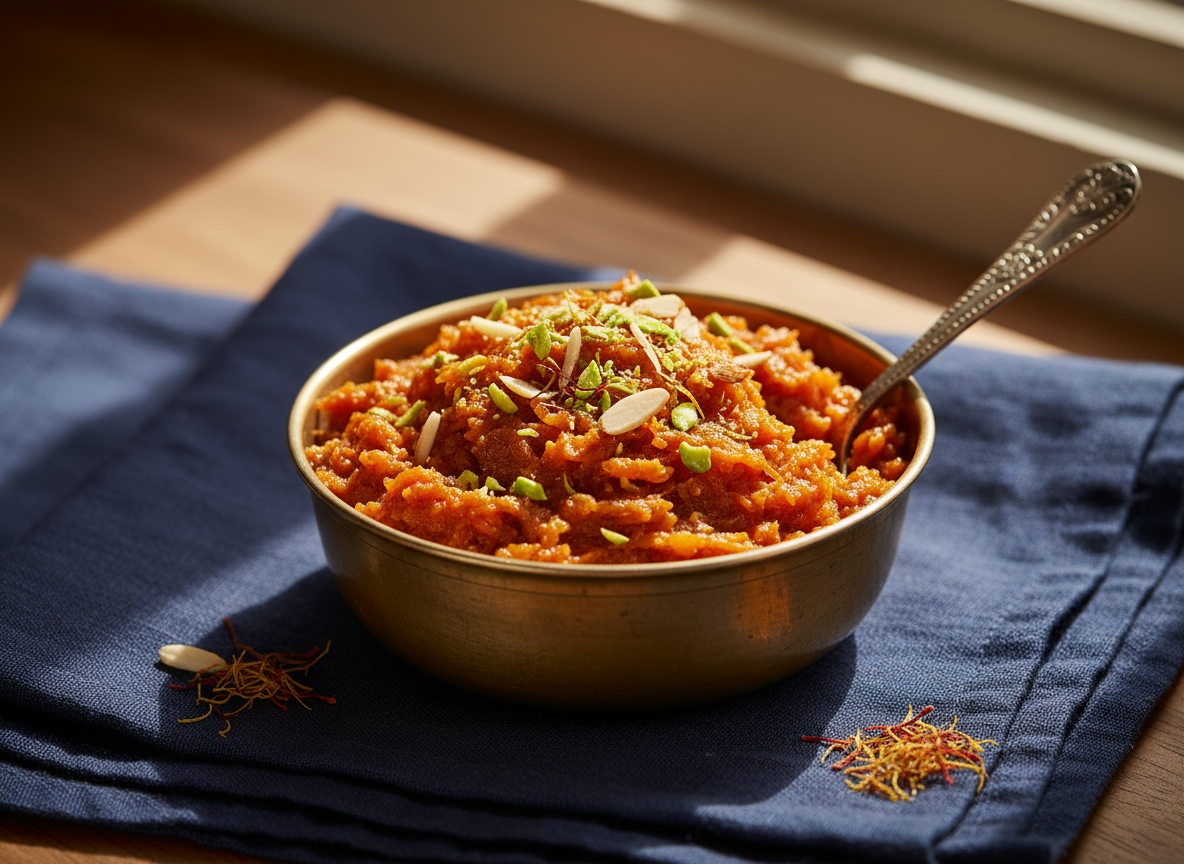
Gajar Ka Halwa Recipe is a comforting carrot dessert. Slow cooking helps the carrots soften and the milk reduce.
Ingredients
- 1 kg carrots, peeled and grated
- 1 litre full-fat milk
- ½ cup sugar, adjust to taste
- 3 tbsp ghee
- 3 green cardamom pods
- Chopped almonds and pistachios
Method
- Add grated carrots and milk to a heavy pan. Simmer, stirring often, until the carrots soften and most of the milk evaporates.
- Add sugar and cardamom. The mixture may loosen as the sugar melts.
- Continue cooking until thick, then stir in ghee.
- Cook a few more minutes, stirring to prevent sticking.
- Garnish with nuts and serve warm or chilled.
Gajar Ka Halwa at a glance
| Preparation | 15 minutes |
|---|---|
| Cooking | 45 minutes |
| Total time | 60 minutes |
| Servings | 6 |
| Difficulty | Easy |
Times are estimates and may vary with your equipment and experience. Adjust seasoning to taste and follow safe food-handling practices.
Frequently asked questions
Which carrots work best?
Fresh, sweet carrots with a firm texture work well.
Can I reduce the sugar?
Yes. Add less sugar and adjust after tasting.
Can gajar halwa be served cold?
Yes. It can be enjoyed warm or chilled.
Choosing and preparing carrots
Fresh carrots with a firm texture and naturally sweet flavour are ideal. Wash them thoroughly, peel if needed and remove the ends. Grate them using the larger holes of a box grater so they retain some texture during cooking. Very finely grated carrots soften quickly but can make the finished halwa less textured.
Carrots contain moisture, and the amount varies by season and freshness. The cooking time is therefore approximate. Use a wide, heavy pan so milk can evaporate steadily. Stir often, especially as the mixture thickens, because the milk solids and natural sugars can catch on the bottom.
Cooking the milk down
Add the grated carrots and milk to the pan and bring it to a gentle simmer. Avoid a rapid boil that may cause milk to foam over. Stir and scrape the base regularly. As the milk reduces, the carrots soften and take on a creamy texture.
Add sugar after the carrots have softened and much of the milk has reduced. Sugar draws moisture from the carrots, so the mixture may become looser again. Continue cooking until the excess liquid evaporates. Add ghee toward the end and stir until the halwa looks glossy and cohesive.
Garnish and flavour choices
Green cardamom gives the dessert a warm fragrance. Lightly crush the pods and remove large husks if you prefer a smoother bite. Almonds and pistachios add crunch, but they are optional. Chop nuts finely and check for allergies before serving to guests.
A small amount of ghee helps round out the flavour. Avoid adding too much at once, because the dessert can become greasy. Taste before adding the full amount of sugar; carrots vary in sweetness, and the final dessert should suit your preference.
Troubleshooting carrot halwa
If the halwa looks watery, continue cooking gently until the liquid reduces. Do not add extra semolina or flour to thicken it; that changes the traditional texture. Stir more frequently as it thickens.
If the mixture sticks, lower the heat and scrape the bottom with a flat wooden spoon. A heavy-bottomed pan helps distribute heat. If the carrots are still firm but the milk has reduced, add a small splash of milk and continue cooking.
If the halwa tastes too sweet, serve it with unsweetened nuts or plain accompaniments next time and reduce the sugar in the next batch. It is difficult to remove sweetness once it has dissolved.
Serving and making ahead
Gajar ka halwa can be served warm as a dessert after a meal or chilled for a firmer texture. A small portion is often enough because it is rich. Garnish just before serving so the nuts retain some crunch.
You can prepare it ahead and refrigerate it in a covered container. Reheat gently in a pan or microwave, stirring between intervals. Add a small splash of milk if it has become too thick. Refrigerate leftovers promptly and use them within three to four days.
Extra cooking guidance and practical tips
Grating the carrots by hand takes a little time, but it gives you control over the texture. A food processor can speed up the work; use a grating attachment rather than blending the carrots into a puree. A puree releases moisture differently and may produce a softer, less textured dessert.
Do not rush the reduction stage. Milk needs time to simmer and combine with the carrots. Keep the heat moderate and stir the bottom and corners of the pan, where milk solids can collect. A wide pan helps moisture escape, but it also means you should stir more frequently as the mixture thickens.
Cardamom is fragrant, so a small quantity is usually enough. If you prefer a stronger aroma, add a little more near the end rather than increasing it dramatically at the beginning. Nuts can be lightly toasted separately to bring out their flavour before garnishing.
The colour of gajar ka halwa depends on the carrots used. Some carrots are naturally deeper orange or red, while others are paler. Do not add artificial colour just to make the dessert look brighter; the natural colour is part of its homemade character.
Serve the halwa in small bowls because it is a rich dessert. A few chopped nuts on top provide texture. If serving guests, keep the nuts separate until the last moment so people with allergies can avoid them.
Prepare the carrots and measure the other ingredients before starting. Once the milk begins reducing, the pan needs regular attention. Planning ahead makes the process easier and prevents leaving the stove unattended.
More helpful tips for home cooks
Some cooks prefer to cook the carrots in milk first and add sugar later, while others use a little ghee to sauté the carrots before adding milk. Both approaches can work. This recipe uses milk as the main cooking liquid and ghee near the end, keeping the process straightforward and allowing the carrot flavour to remain clear.
If you want a slightly richer dessert, you can replace a small portion of the milk with evaporated milk, but it will reduce differently and may need closer stirring. Avoid adding sweetened condensed milk without reducing the sugar, because it can make the dessert excessively sweet.
Keep a small bowl of water nearby for rinsing the spoon if sticky halwa begins to build up on it. Do not add water directly to the dessert unless needed to prevent scorching; extra water extends the reduction time and can dilute the flavour.
Use a spatula that reaches the corners of the pan. Scraping the base and sides regularly prevents milk solids from browning too much. A little caramelisation can add depth, but burnt patches create a bitter taste that is difficult to correct.
Allow the halwa to cool slightly before transferring it to a storage container. Use a clean, dry spoon when serving from the container. This reduces the chance of introducing moisture or contaminants and helps leftovers keep their quality.
If you are preparing the dessert for a celebration, make it a day ahead and reheat gently. Add the nuts after reheating, then garnish with a few extra chopped pistachios. This gives the dish a freshly finished appearance without needing to cook it at the last minute.
Final preparation notes
If you want to prepare a larger batch, use a wider pan and stir more frequently. Doubling the ingredients in a small pot can make the milk take much longer to reduce and increases the chance of uneven cooking. It is often better to cook two batches than to overcrowd the pan.
A spoonful of chopped nuts can be mixed through the halwa, but reserve most for the garnish so their texture remains noticeable. If serving a group, label the dessert clearly if it contains nuts and offer a nut-free portion when needed.
Helpful details for consistent results
For a smoother finish, you can mash a small portion of the cooked carrots against the side of the pan and mix them back in. This thickens the dessert naturally while leaving most of the grated carrot texture intact. Avoid blending the entire batch unless you specifically want a puree-like consistency.
When buying carrots, choose firm ones without soft spots or a dry, shrivelled surface. Fresh carrots are easier to grate and usually have a cleaner flavour. Remove any damaged sections before cooking.more detailChicken Biryani Recipe – Fragrant Pakistani Chicken Rice
More serving and preparation advice
When the halwa is nearly ready, scrape the sides of the pan and fold the mixture back into the centre. This prevents the thin layer around the edges from drying out while the centre remains moist. Keep the heat low and stir until the texture is consistent throughout.
The dessert should look moist and glossy rather than runny. If a spoon dragged through the pan leaves a path that slowly closes, the mixture is usually thick enough for serving warm. It will become firmer after cooling, so do not cook it until completely dry.
If you are making this for a family with different sweetness preferences, serve a small bowl of extra chopped nuts or plain cream separately rather than increasing sugar in the whole pan. This lets each person adjust their serving.
Leave a Reply