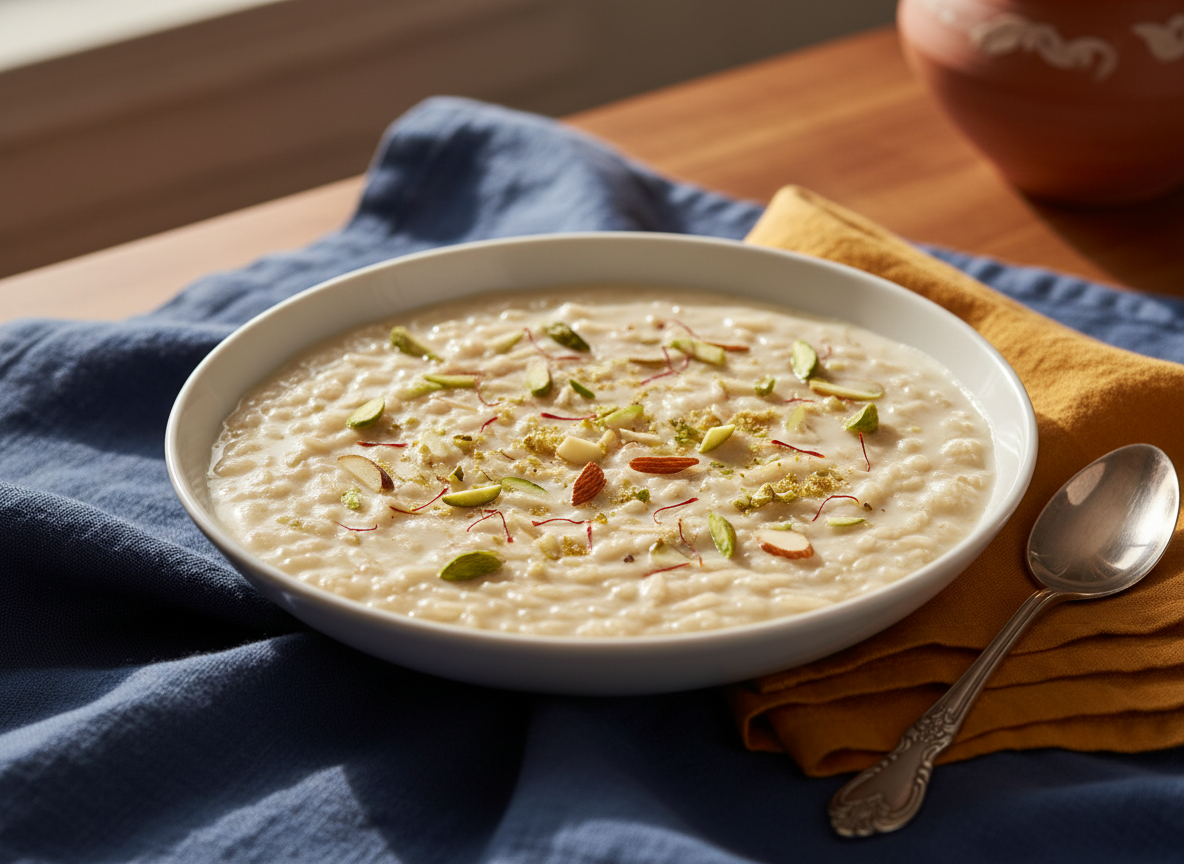
Rice Kheer Recipe is a gently simmered milk pudding. Stir regularly so the milk does not catch at the bottom of the pan.
Ingredients
- ¼ cup basmati rice, rinsed and soaked
- 1 litre milk
- ⅓–½ cup sugar, to taste
- 3 green cardamom pods, lightly crushed
- Chopped almonds and pistachios
- A few strands of saffron (optional)
Method
- Bring milk to a gentle simmer in a heavy pan.
- Add drained rice and cardamom. Cook on low heat, stirring frequently.
- When the rice is soft and the milk has thickened, add sugar.
- Simmer for a few more minutes, then remove from heat.
- Garnish with nuts and saffron. Serve warm or chilled.
Rice Kheer at a glance
| Preparation | 5 minutes |
|---|---|
| Cooking | 50 minutes |
| Total time | 55 minutes |
| Servings | 6 |
| Difficulty | Easy |
Times are estimates and may vary with your equipment and experience. Adjust seasoning to taste and follow safe food-handling practices.
Frequently asked questions
Why does kheer thicken as it cools?
Rice starch continues to thicken the milk pudding as it cools.
Can I serve rice kheer chilled?
Yes. Cool it safely and refrigerate before serving.
How do I stop milk sticking?
Use a heavy pan and stir regularly over low heat.
Extra cooking guidance and practical tips
Choose a heavy-bottomed pot to reduce the chance of milk catching on the base. A wide pan allows moisture to evaporate, but a deeper pot can reduce splashing. Whichever you use, keep the heat gentle and stir often, especially around the bottom edge.
Rinsing and soaking the rice helps remove excess surface starch and encourages more even cooking. Drain it before adding to the milk. Some cooks lightly crush a portion of the soaked rice to thicken the pudding more quickly; this is optional and changes the final texture.
Do not add all the sugar at the beginning. Sweetened milk can take longer to reduce, and sugar may catch on the bottom if the pan is not stirred carefully. Add it once the rice is tender and the milk has begun to thicken, then simmer briefly to combine.
Cardamom gives kheer its familiar fragrance. Crush the pods lightly so the flavour can infuse, and remove whole pods before serving if desired. Saffron is optional; if using it, steep a few strands in warm milk before adding.
Kheer thickens as it cools because the rice continues to absorb liquid. Keep this in mind when deciding when to stop cooking. If it already looks very thick in the hot pan, it may become too firm after chilling. Leave it slightly looser than your preferred final texture.
Serve kheer in small bowls, warm or chilled. Garnish with chopped almonds and pistachios just before serving. If you are serving people with nut allergies, leave the nuts off and use a little cardamom instead.
More helpful tips for home cooks
Use full-fat milk for a creamy result, or lower-fat milk if you prefer a lighter pudding. Lower-fat milk may take a little longer to develop the same rich mouthfeel. Avoid using flavoured or sweetened milk because it changes the balance of the recipe.
Keep the milk at a gentle simmer rather than a rolling boil. A vigorous boil can cause it to foam over and may make the rice break apart. Stir in a slow figure-eight motion, scraping the bottom and sides so the rice does not settle and stick.
The amount of sugar is flexible. Start with the lower quantity, allow it to dissolve, then taste carefully. Remember that chilled desserts can taste slightly less sweet than warm ones, so consider how you plan to serve the kheer before making a final adjustment.
If the kheer becomes thicker than you like, stir in a little warm milk until it reaches the desired consistency. Add a small amount at a time. If it is too thin, continue simmering gently, stirring frequently, until some moisture evaporates.
To serve chilled kheer, transfer it to shallow bowls or a covered container and refrigerate promptly. Do not leave the pot on the counter for hours to cool. Shallow portions cool more quickly and can be covered once the steam has subsided.
For a subtle variation, add a few strands of saffron or a small splash of rose water near the end. These flavours can be strong, so use them sparingly. The classic combination of milk, rice and cardamom is delicious on its own.
Final preparation notes
If you want a thicker, more traditional pudding, continue reducing the milk slowly after the rice softens. Do not increase the flame to hurry the process. Gentle simmering gives the rice time to release starch and blend into the milk without scorching the base.
For individual servings, portion the kheer into small cups while it is still pourable. Let it cool briefly, then refrigerate. Garnish each cup with nuts or cardamom just before serving. This makes the dessert easy to serve at family meals or gatherings.
A clean spoon should be used each time you serve from a shared container. Do not return a spoon that has touched someone’s bowl to the storage container. Small handling habits help keep leftovers safe and fresh.
If the rice grains remain firm while the milk is already thick, add a little warm milk and continue cooking over low heat. Stir often until the rice softens. This is better than turning the heat high, which can burn the milk.
Avoid adding acidic ingredients such as lemon to milk kheer, as they can cause the milk to split. Keep the flavour profile simple with cardamom, saffron or a little rose water if desired.
Helpful details for consistent results
The pudding can be adapted for different textures. For a looser dessert, stop reducing the milk earlier and serve warm. For a thicker chilled kheer, simmer a little longer, remembering that it will firm up in the refrigerator. Keep notes of the rice brand and cooking time if you want to repeat a preferred result.
If you are serving kheer after a spicy meal, a small chilled portion can be a gentle finish. Keep it refrigerated until serving and do not leave the bowls sitting out for an extended period. Return any untouched portions to the refrigerator promptly.
Use a clean, dry measuring cup for rice and sugar. Measuring the rice consistently helps keep the pudding balanced. Too much rice can make the kheer dense, while too little may leave it thin unless it is reduced for a long time.
When stirring, scrape the bottom with a wooden spoon or heat-safe spatula. A whisk can break up small clumps, but avoid vigorous whisking once the rice is soft because the grains can become mashed. A gentle stir keeps the texture appealing.
Kheer is a forgiving recipe once you understand the reduction stage. If the first batch is thicker than you wanted, adjust the milk slightly next time. If it is thin, allow more time for simmering. Small changes are more useful than changing several ingredients at once.moreChana Chaat Recipe – Easy Pakistani Chickpea Snack
More serving and preparation advice
A traditional kheer is not meant to be rushed. Gentle cooking gives the rice time to soften and release starch into the milk. If you keep the flame low and stir consistently, you can develop a creamy texture without needing thickening agents.
If you use a different rice variety, the cooking time may change. Some short-grain rice softens faster and releases more starch, while long-grain basmati may remain more distinct. Check the grains as they cook and adjust the simmering time rather than following the clock exactly.
For a dairy-free experiment, use an unsweetened plant-based drink that is suitable for simmering, but expect a different flavour and consistency. The classic recipe relies on dairy milk, so substitutions should be treated as a variation rather than an identical result.
Do not store kheer in a large warm pot for a long time. Divide it into smaller containers so it cools more quickly, then refrigerate. This is especially important in warm weather. Keep the refrigerator cold and avoid leaving individual bowls out after serving.
Extra notes for serving at home
A small amount of crushed pistachio or almond on top gives a gentle crunch, but the garnish is optional. If you prefer a completely smooth bowl, leave nuts out and add only a pinch of cardamom. The dessert should still taste rich from the slow-simmered milk and softened rice.
When you make kheer regularly, note whether you prefer it warm or chilled and adjust the final reduction accordingly. Warm kheer can be served a little looser, while a chilled bowl needs enough body to remain creamy after refrigeration. A small adjustment in simmering time can make a noticeable difference.
The recipe is also useful for using a small amount of leftover plain rice, although the texture will differ from cooking raw rice in milk. If using cooked rice, add it only after bringing the milk to a simmer and reduce the cooking time. Check that the rice is fresh and has been stored safely.
For the best flavour, use plain milk and fresh cardamom rather than a strongly flavoured packaged dessert mix. The slow-cooked rice and milk create the pudding’s character, while the garnish should remain a small finishing touch.
Leave a Reply