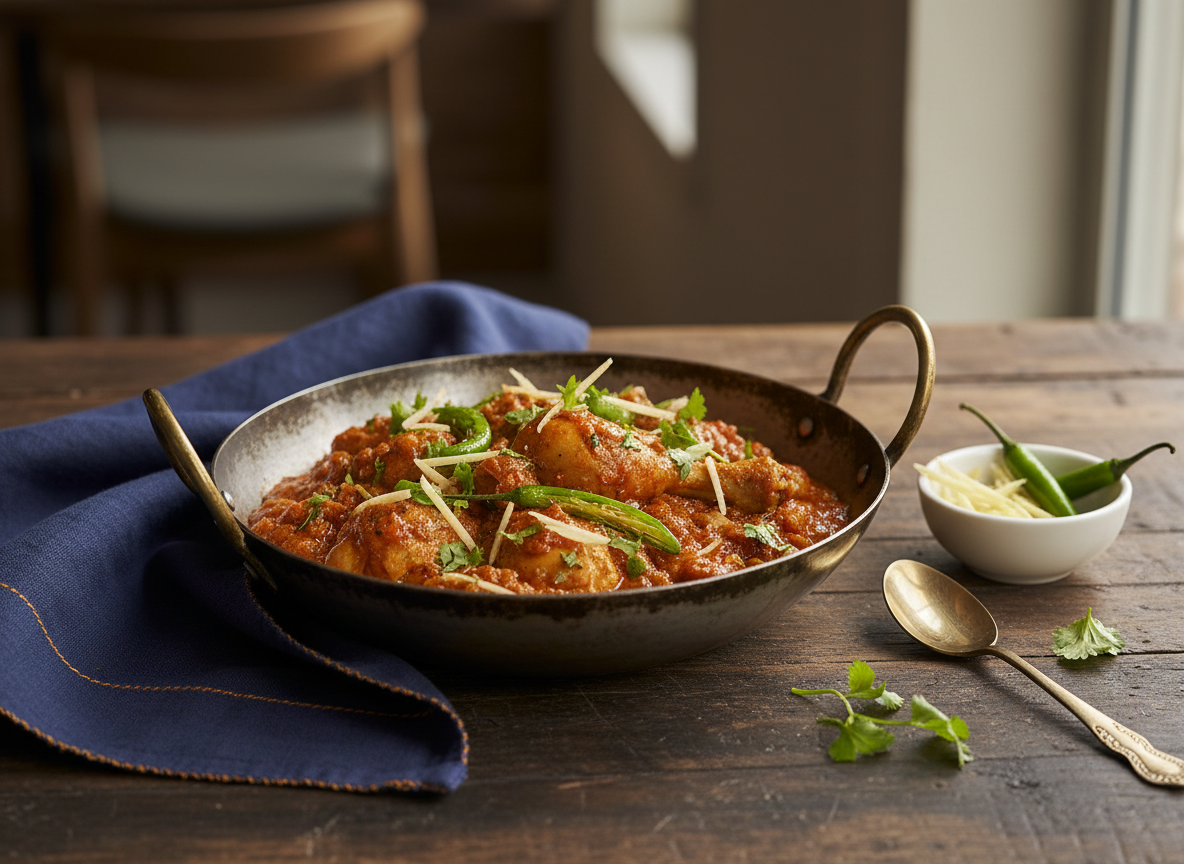
Chicken Karahi Recipe is one of Pakistan’s best-loved home-style chicken dishes. It is known for its tomato-rich masala, fresh ginger, green chillies and lively aroma. Unlike a very thin curry, a traditional karahi is usually cooked until the tomatoes reduce and cling to the chicken. The result is a dish that tastes bold but still lets the flavour of the chicken and fresh ingredients come through.
This recipe uses familiar ingredients and a straightforward stovetop method. It is suitable for a family meal, a weekend lunch or a dinner when you want something special without a complicated process. The heat level is flexible: use fewer green chillies and less red chilli powder for a milder karahi, or adjust them upward if your family enjoys a hotter dish.
The quantities below are based on 750 grams of bone-in chicken and make approximately four servings. Chicken pieces vary in size, and cooking time depends on the pan, stove and cut of meat, so use the doneness checks in the method rather than relying only on the clock.
Recipe at a glance
Preparation time: about 15 minutes. Cooking time: about 35 minutes. Total time: approximately 50 minutes. Servings: 4. Cooking method: stovetop karahi or a wide, heavy-based pan. Difficulty: medium. The time is an estimate and may vary with your equipment and the size of the chicken pieces.
Ingredients and why they matter
Chicken: Use 750 grams of bone-in chicken cut into medium pieces. Bone-in pieces bring flavour to the masala and are traditional in many home-style versions. Boneless chicken can also be used, but it generally cooks faster and can become dry if left simmering for too long.
Tomatoes: Four medium tomatoes form the main sauce. Chop them so they soften evenly. Ripe tomatoes usually break down more easily and provide a balanced sweet-tart flavour. If the tomatoes are particularly firm, allow extra time for them to soften before reducing the masala.
Oil or ghee: Two tablespoons are enough to begin cooking. Ghee gives a richer aroma, while neutral cooking oil keeps the flavour lighter. The amount needed can vary slightly with the pan and the chicken.
Ginger-garlic paste: One tablespoon builds the savoury base. Cook it briefly with the chicken and spices so its raw aroma fades, but avoid scorching it.
Ground spices: Use one teaspoon of red chilli powder, one teaspoon of coriander powder, half a teaspoon of cumin and salt to taste. These seasonings support the tomato and ginger flavours. Start with less chilli if you are unsure, because you can adjust the seasoning near the end.
Fresh finishing ingredients: Three slit green chillies, one tablespoon of ginger cut into thin matchsticks, fresh coriander and lemon complete the dish. Add these near the end so their freshness remains noticeable.
Equipment and preparation before cooking
A wide karahi is ideal because it gives the chicken room to brown and allows moisture to evaporate. If you do not have a karahi, choose a wide, heavy-bottomed frying pan or sauté pan. A very small saucepan can crowd the chicken and trap steam, making it harder to reduce the masala.
Before turning on the stove, wash and prepare the tomatoes, slit the green chillies, cut the ginger into matchsticks and measure the spices. Keep the chicken refrigerated until you are ready to cook. Use a separate board and utensils for raw chicken, and wash your hands and work surfaces after handling it.
Patting the chicken reasonably dry with clean kitchen paper can help it brown instead of releasing excess surface water immediately. Do not rinse raw chicken in the sink, as splashing can spread germs around the kitchen.
Step-by-step method
1. Heat the oil or ghee in the karahi over medium-high heat. Add the chicken in a single layer if possible. Let the pieces take on a little colour, turning them as needed. If your pan is small, brown the chicken in batches rather than crowding it.
2. Add the ginger-garlic paste. Stir for a short time until fragrant. Add the red chilli powder, coriander powder, cumin and salt. Mix so the spices coat the chicken. If the pan looks dry, lower the heat briefly and stir carefully so the ground spices do not burn.
3. Add the chopped tomatoes and mix well. Cover the pan and cook over medium heat, stirring from time to time. The tomatoes will soften and release liquid. The chicken will cook in this moisture while the flavours combine. If the mixture begins sticking before the chicken is tender, add a small splash of water rather than allowing the masala to burn.
4. Check the largest chicken piece for doneness. The centre should no longer be raw, and poultry should reach a safe internal temperature of 74°C (165°F) measured with a food thermometer at the thickest part without touching bone. If it needs more time, cover and continue cooking gently.
5. Once the chicken is cooked, remove the lid. Continue stirring and cooking until excess tomato liquid evaporates and the masala becomes thick. You may see a little oil around the edges. This is a sign that the sauce has reduced; it is not necessary to cook until the pan becomes excessively oily.
6. Add the slit green chillies and ginger matchsticks. Cook for another minute or two so they warm through while keeping some freshness and texture. Taste the masala and adjust salt or lemon to your preference.
7. Turn off the heat. Sprinkle over chopped fresh coriander and a squeeze of lemon. Let the karahi rest for a few minutes, then serve while hot.
How to get a thick, flavourful karahi
The most important part of the texture is reducing the tomato masala after the chicken has cooked. If you serve it while the tomatoes are still watery, the flavour may taste diluted. Keep the pan uncovered for the final stage and stir regularly so the sauce thickens without catching at the bottom.
Use ripe tomatoes and avoid adding too much water at the beginning. The chicken and tomatoes release moisture as they cook. Add extra liquid only when needed to prevent sticking or to help the chicken finish cooking.
Fresh ginger is not just decoration. Its sharp, clean flavour balances the richness of the masala. Add most of the ginger near the end rather than cooking all of it for a long time.
Common mistakes and how to avoid them
Cooking the chicken over very high heat throughout can brown the outside before the centre is cooked. Brown it initially, then let it cook through at a steady medium heat. The largest pieces should always be checked before serving.
Adding all the water at once can leave the finished dish thin. Begin with the tomatoes and allow them to release their own liquid. Add only small splashes if the pan becomes too dry.
Burning the spices gives the masala a bitter taste. Stir the ground spices briefly and add tomatoes soon after. Lower the heat if the pan is extremely hot.
Cutting the ginger and green chillies too early and leaving them exposed for a long time can reduce their fresh aroma. Prepare them shortly before the finishing stage when possible.
Using too much chilli at the beginning can make it difficult to balance the dish. Start with a moderate amount, taste after the masala reduces, and then adjust carefully.
Variations and substitutions
For a boneless version, use boneless chicken cut into even pieces and reduce the cooking time. Check the centre of the largest piece so it is fully cooked but not overdone. Boneless chicken breast is lean and can dry out more quickly than thigh meat.
For a milder family version, reduce the red chilli powder and use one green chilli or omit it. You can still keep the ginger, coriander and tomato flavours prominent.
If you prefer a richer finish, use ghee instead of oil or add a small extra spoon near the end. Keep the quantity modest so the tomato masala remains the main feature.
If fresh tomatoes are not very ripe, cook them a little longer until they break down. Avoid relying on large amounts of tomato paste as a direct replacement, because it changes the flavour and thickness.
What to serve with chicken karahi
Warm naan or roti is a classic choice because it can scoop up the thick masala. Plain chapati works well for an everyday meal. Steamed basmati rice is another option, especially if you prefer a less bread-focused plate.
Fresh cucumber, onion and tomato salad adds crunch and freshness. Plain yogurt or cucumber raita can soften the heat. Lemon wedges, mint chutney and sliced green chillies can be offered separately so everyone can adjust their own plate.
For a fuller family spread, serve the karahi with a simple salad, one bread or rice option and a cooling side. You do not need many elaborate dishes because the karahi itself is strongly flavoured.
Storage, reheating and food safety
Refrigerate leftovers promptly in a shallow, covered container. Do not leave cooked chicken at room temperature for more than two hours, or one hour in very hot conditions above 32°C (90°F). Use refrigerated leftovers within three to four days.
Reheat only the portion you plan to eat, until it is steaming hot throughout. A small splash of water can loosen the masala if it has thickened in the refrigerator. Stir during reheating so the centre warms evenly. Avoid repeatedly cooling and reheating the same batch.
Freeze portions in suitable airtight containers if you need to keep them longer. Thaw safely in the refrigerator and reheat thoroughly. The texture of the tomato masala may change slightly after freezing, but stirring while reheating can help bring it together.
Frequently asked questions
Can I make chicken karahi without a karahi pan? Yes. A wide, heavy-bottomed frying pan or sauté pan works well. Choose a pan that gives the chicken enough space and lets moisture evaporate.
Can I use boneless chicken? Yes. Cut it into even pieces and shorten the cooking time. Check that the centre reaches 74°C (165°F) and avoid overcooking.
Why is my chicken karahi watery? It may need more uncovered cooking time. Let excess tomato liquid evaporate while stirring regularly. Avoid adding too much water at the start.
How can I make the dish less spicy? Reduce the red chilli powder and green chillies. Taste the masala near the end before adding more heat.
Can I prepare it ahead? You can cook it ahead and refrigerate it safely. Reheat gently until piping hot. Add a little fresh coriander and ginger just before serving to refresh the flavour.
Can I add yogurt? This version does not require yogurt. Adding it will change the flavour and texture; if you experiment, use a small amount and stir it in carefully over lower heat so it does not split.
How do I know the chicken is cooked? Check the thickest part of the largest piece with a food thermometer. It should reach 74°C (165°F). Do not rely on colour alone.for more infoChicken Karahi Recipe – Pakistani Tomato Chicken Karahi
Final thoughts
Chicken karahi is a useful recipe to keep in your home-cooking collection because it uses familiar ingredients and can be adjusted to suit different tastes. Take your time reducing the tomato masala, check the chicken carefully and finish with fresh ginger, green chillies and coriander. Serve it hot with naan, roti or rice and a cooling side. Once you are comfortable with the method, you can adjust the chilli level and garnish while keeping the same simple cooking approach.
Leave a Reply