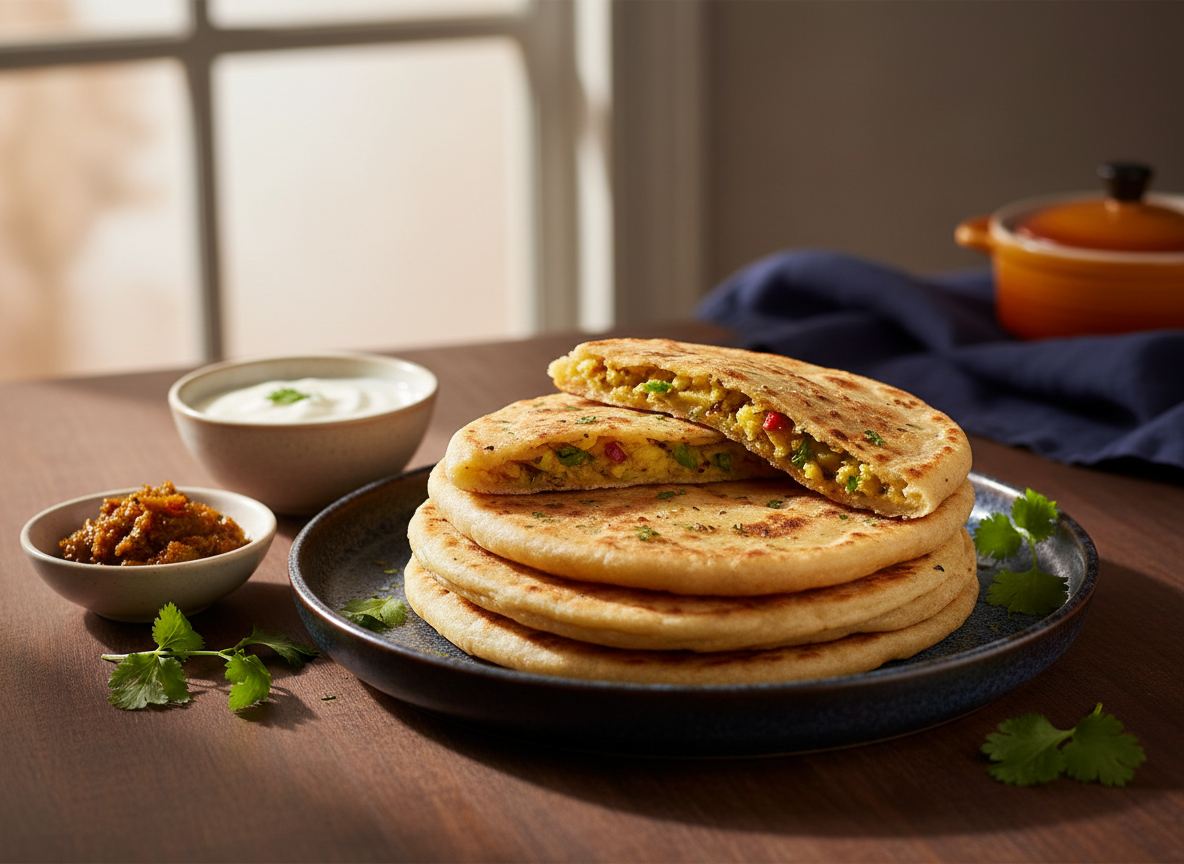
Aloo Paratha Recipe is a comforting stuffed flatbread made with whole-wheat dough and a seasoned potato filling. It is popular for breakfast, lunch boxes and simple dinners because it uses inexpensive ingredients and can be served with yogurt, pickle or chutney. A good paratha has a soft centre, a well-seasoned filling and a lightly crisp surface with golden spots.
This guide explains the ingredients, preparation and cooking method in a practical order. Read through the method once before starting, measure the ingredients and prepare your cooking area. Small details such as dough texture, moisture level and heat control make a noticeable difference to the final result.
The quantities are a starting point for a home kitchen. Ingredient sizes and moisture vary, so use the visual and texture cues in the instructions. Adjust seasoning gradually rather than adding a large amount at once.
If you are cooking for guests, prepare the ingredients in advance and cook the dish close to serving time. Freshly cooked bread and kebabs are at their best when served warm; halwa can be held briefly and reheated gently.
Recipe at a glance
Preparation: 15 minutes. Cooking: 20 minutes. Servings: 3–4. Method: stovetop. Difficulty: easy to medium. Times are estimates and depend on equipment, ingredient temperature and portion size.
Ingredients
- 2 cups whole-wheat flour
- Water as needed and a pinch of salt for the dough
- 2 medium potatoes, boiled, peeled and mashed
- 1 green chilli, finely chopped
- 2 tbsp chopped coriander
- ½ tsp cumin
- ½ tsp coriander powder
- Salt to taste
- Ghee or oil for cooking
Choose fresh ingredients and measure them before cooking. Keep salt and chilli adjustable to your taste. Use clean utensils and separate equipment for raw meat where applicable. If an ingredient is optional, leave it out rather than replacing it with a large amount of another seasoning.
The quality and condition of the main ingredient affect the result. Potatoes should be cooked until tender; mince should be kept chilled until mixing; flour should be fresh and stored dry. Preparing ingredients consistently helps them cook evenly.
Equipment and preparation
Use a stable, clean cooking surface and a pan suited to the quantity. A heavy pan distributes heat more evenly and is less likely to develop hot spots. Keep a plate ready for cooked portions and use tongs or a spatula to turn food safely.
Complete the chopping, measuring and mixing before heating the pan. This is especially helpful when frying or cooking over a hot tawa, because the food may need attention throughout the process. Keep children away from hot oil and the stove.
Step-by-step method
- Place the flour and salt in a bowl. Add water gradually and mix until a dough forms. Knead until smooth and soft, but not sticky.
- Cover the dough and rest it for about 15 minutes. Resting allows the flour to absorb water and makes rolling easier.
- Mash the boiled potatoes thoroughly. Remove large lumps because they can tear the dough while rolling.
- Mix the potato with green chilli, coriander, cumin, coriander powder and salt. Taste a tiny amount of the filling and adjust the seasoning before stuffing.
- Divide the dough into equal balls and the filling into portions. Flatten one dough ball, place filling in the centre and bring the edges together to seal.
- Dust lightly with flour and roll gently into a round paratha. Use even pressure and turn the dough as you roll so the filling spreads without breaking through.
- Heat a tawa over medium heat. Place the paratha on it and cook until small bubbles appear. Flip, brush with a little ghee or oil, then turn again and cook until both sides have golden brown spots and the dough is cooked through.
Texture, flavour and heat control
The filling should be cool and fairly dry before stuffing. If the potatoes are wet or lumpy, the dough may tear. Roll gently, dusting only as much flour as needed.
Heat control matters as much as the ingredient list. If the surface browns too quickly, lower the heat so the centre has time to cook. If food is pale and releasing moisture, the pan may be crowded or not hot enough. Work in batches when necessary and allow the pan to recover its heat between batches.
Taste and adjust only when it is safe and appropriate to do so. A little lemon, fresh coriander or chutney at the table can brighten the dish without changing the main cooking process. Avoid over-seasoning early, because flavours become more concentrated as moisture evaporates.
Common mistakes to avoid
One common mistake is rushing preparation. Unevenly cut ingredients or poorly mixed seasoning can lead to inconsistent results. Take a moment to make portions similar in size so they cook at roughly the same rate.
Another mistake is using excessive heat from beginning to end. High heat may be useful for starting a cook, but many dishes need moderate heat to finish properly. Watch the food rather than relying only on the stove setting.
Adding too much liquid can affect texture. Follow the quantities and add extra water only when the method calls for it. If a mixture becomes too wet, pause and correct the texture before shaping or cooking rather than trying to fix it in the pan.
Variations and substitutions
Add a pinch of chilli flakes, amchur or roasted cumin if you enjoy a tangier filling. For children or anyone who prefers mild food, leave out the green chilli and use coriander and cumin for flavour.
You can adjust the seasoning to match the meal and the people eating it. Keep the core method the same while changing only one or two elements at a time. This makes it easier to understand how a substitution changes the taste or texture.
For a larger gathering, cook in batches rather than doubling everything in one crowded pan. If scaling a recipe, check that the pan is large enough and that the centre of each portion cooks safely.
Serving suggestions
Serve the dish with simple accompaniments that balance its flavour. Fresh salad, plain yogurt, chutney or lemon can add freshness. Choose one or two sides rather than making the plate too crowded.
For a family meal, place accompaniments in separate bowls so everyone can choose what they enjoy. Keep hot foods hot and chilled sides refrigerated until serving.
If serving as part of a larger spread, prepare the sides first and cook the main item last. This helps the hot food reach the table at its best texture.
Storage and food safety
Cool cooked food promptly and store it in a covered container in the refrigerator. Do not leave perishable food at room temperature for more than two hours, or one hour in very hot conditions above 32°C (90°F). Refrigerate leftovers promptly and use them within three to four days.
Reheat leftovers until steaming hot throughout. For meat dishes, use a food thermometer to check safe doneness and reheating temperatures. Do not repeatedly cool and reheat the same batch; reheat only the portion you intend to eat.
If freezing, use an airtight freezer-safe container and label it with the date. Thaw in the refrigerator rather than on the counter. Texture can change after freezing, so stir or reshape gently as appropriate when reheating.
Frequently asked questions
How do I stop the paratha from tearing? Use a soft but not sticky dough, cool and dry filling, and gentle rolling pressure.
Can I prepare the filling ahead? Yes. Refrigerate it in a covered container and use it within a safe period; bring it out shortly before shaping.
Can I freeze uncooked parathas? Layer rolled parathas with baking paper and freeze flat in a suitable container. Cook from frozen over moderate heat, allowing extra time.
Why is my paratha hard? The dough may be too firm, the tawa too hot or the paratha cooked for too long. Adjust the dough and heat.
What goes well with aloo paratha? Yogurt, pickle, mint chutney or a cup of tea make simple accompaniments.
Final thoughts
This recipe is designed to be manageable with everyday kitchen equipment and familiar ingredients. Take time to prepare the components, watch the texture as it cooks and adjust the seasoning to suit your household. Once you have made it once, you will know which parts can be prepared ahead and which are best done just before serving.
For more home-cooking inspiration, explore the other recipes on KitchenVibez and build a meal plan around the ingredients you already have.
Extra cooking guidance and practical tips
Choose potatoes that mash smoothly after boiling. Drain them well and allow excess steam to escape before mashing. If the potato filling is wet, it may push through the dough when rolled. A dry, evenly seasoned filling is easier to portion and produces a more consistent paratha.
Do not overfill the dough. A moderate amount of filling leaves enough dough around it to seal securely. Pinch the gathered edges together and remove any thick excess dough before rolling. This prevents a dense knot in the middle and helps the paratha cook evenly.
Use a medium-hot tawa rather than an extremely hot one. If the surface browns before the inside cooks, reduce the heat. If the paratha remains pale and dry for a long time, increase the heat slightly. Every stove behaves differently, so watch the colour and feel of the bread.
Brush ghee or oil in a thin layer. Too much fat can make the bread heavy, while too little may leave it dry. Turn the paratha more than once if needed so both sides cook evenly and the filling becomes hot throughout.
For meal preparation, boil the potatoes and mix the filling ahead, then refrigerate it in a covered container. Make the dough closer to cooking time for a softer result. Keep uncooked dough covered so its surface does not dry out.for more informationHalwa Puri Recipe – Pakistani Breakfast Plate
Leave a Reply